
Before illness, many people move through life on autopilot, consumed by schedules, appearances, resentment, comparison, productivity, and fear. Days blur together. Conversations become transactional. People wake up, perform responsibilities, scroll through distractions, carry silent burdens, and repeat the cycle again tomorrow.
They survive, but they do not fully feel.
They breathe, but they are disconnected from meaning, gratitude, presence, and love.
Then cancer enters the room.
Not politely.
Not gradually.
It interrupts everything.
Suddenly the ordinary becomes sacred.
- A quiet morning matters.
- A conversation matters.
- Breathing matters.
- Love matters.
The things once overlooked suddenly become the things that hold life together.
Cancer does not simply confront a person with death. It confronts them with life, with how much of it they may have never truly lived.
That is what many people do not understand about survival.
The greatest battle is not always physical.
Sometimes the deepest fight is psychological, emotional, and spiritual. It is the confrontation between who you were pretending to be and who you become when the illusion of control disappears.
The quote is not glorifying suffering.
It is exposing what suffering reveals.
Illness has a way of awakening people from emotional sleep. It tears through distraction and forces the soul to look directly at what actually matters. Cancer exposes how fragile human beings really are beneath their routines, titles, achievements, and carefully managed appearances.
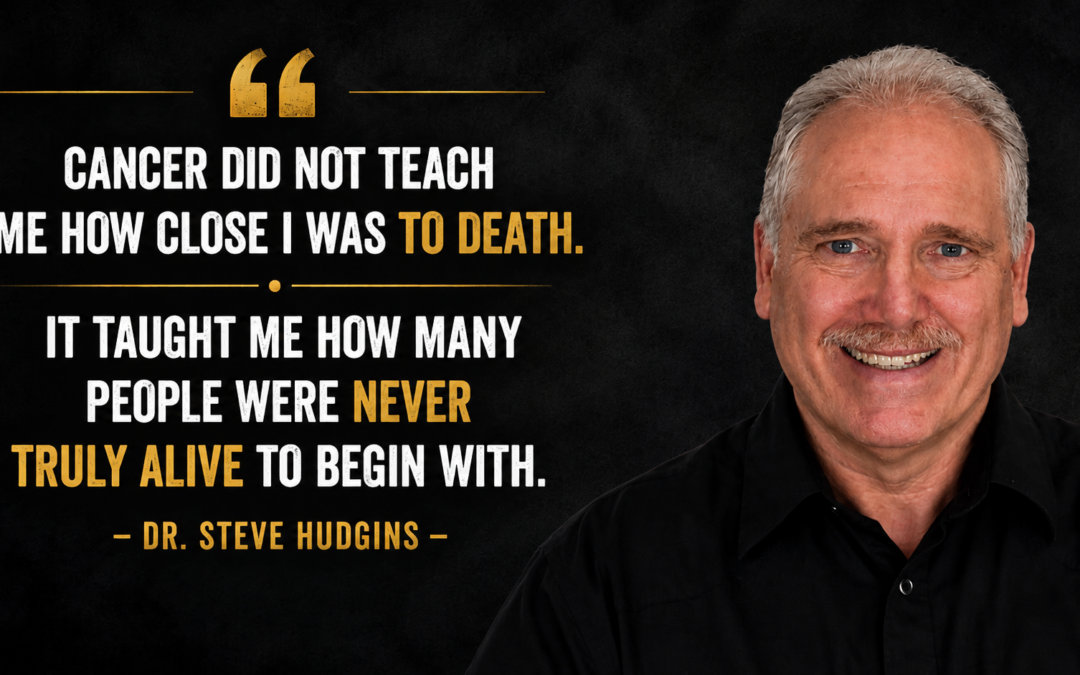
“Cancer did not teach me how close I was to death.
It taught me how many people were never truly alive to begin with.”
That is the deeper wound many survivors quietly discover.
People postpone living while waiting for the “right time” to slow down, reconnect, forgive, rest, love honestly, heal, or become present. Many wear masks so long they forget who they are beneath them. Some spend years performing strength while privately feeling empty. Others chase success while starving emotionally inside relationships they no longer feel connected to.
Cancer interrupts the performance.
It forces questions many people spend their lives avoiding.
Am I truly living?
Am I present with the people I love?
Have I mistaken productivity for purpose?
Have I been surviving instead of living?
Yet cancer survivors often describe the same paradox:
The closer they came to death, the more alive they finally felt.
Colors became brighter.
Relationships became clearer.
Time became more valuable.
Petty things lost importance.
The soul recalibrated.
Many survivors discover something unsettling after treatment ends. The body may heal faster than the nervous system. People celebrate remission while the survivor quietly wrestles with fear, gratitude, grief, and uncertainty all at once. Friends say, “You beat it,” while internally the mind still scans every ache, every pain, every silence for signs danger may have returned.
That reality changes a person.
Some become softer.
Some become more honest.
Some finally stop pretending.
Some begin telling the truth they buried for years.
Because once mortality sits beside you long enough, superficial living loses its seduction.
The greatest tragedy is not always physical death.
Sometimes the greatest tragedy is reaching the end of life without ever fully entering it.
— Dr. Steve Hudgins